

A strong motorcycle specialty tool range is built around the repair jobs customers need to complete—not simply the number of products in a catalogue. For distributors, wholesalers and tool brands, the goal is to cover relevant maintenance tasks, provide technical depth where fitment matters, and keep the range understandable and commercially manageable.
This guide explains how to plan a motorcycle specialty tool assortment by repair task, distinguish core products from application-specific tools, organize SKUs, and use customer and sales evidence to decide what to add next. It focuses on range planning rather than choosing a tool-kit storage format or evaluating a supplier.
1. Start with the customers you want the range to serve
Before selecting individual tools, define the type of customer and the work they need to perform. A range designed for general repair shops will not necessarily suit a distributor serving off-road specialists, scooter workshops, powersports dealers or a brand building a focused service-tool programme.
| Target customer | What to understand first | Range-planning implication |
|---|---|---|
| General motorcycle repair shops | Common service jobs, vehicle mix and frequently used tools | Build practical coverage across routine maintenance and common repairs. |
| Specialist workshops | Specific repair procedures, technical fitment and less-common service tasks | Offer deeper options in relevant specialist categories instead of expanding every category equally. |
| Parts distributors and wholesalers | Customer profile, regional demand, price positioning and replenishment needs | Balance core products with selected specialist SKUs that differentiate the catalogue. |
| Tool brands and private-label buyers | Brand positioning, intended user, product presentation and launch priorities | Plan the range, product specification, branding and packaging as one coherent programme. |
These are planning prompts, not fixed market segments. Use your own customer enquiries, sales history and target-market knowledge to decide which needs matter most.
2. Organize the range by repair task
Customers usually think in terms of a job to be completed. A catalogue becomes easier to navigate when tools are grouped around maintenance tasks and applications, with technical specifications and fitment details available within each group.
Drivetrain and chain service
Chain tools may cover breaking, pin removal, pressing and riveting. The range should distinguish the chain types and sizes a tool is intended to handle, as well as differences in construction or application. A broad label such as “chain tool” is not enough to confirm that two products serve the same job.
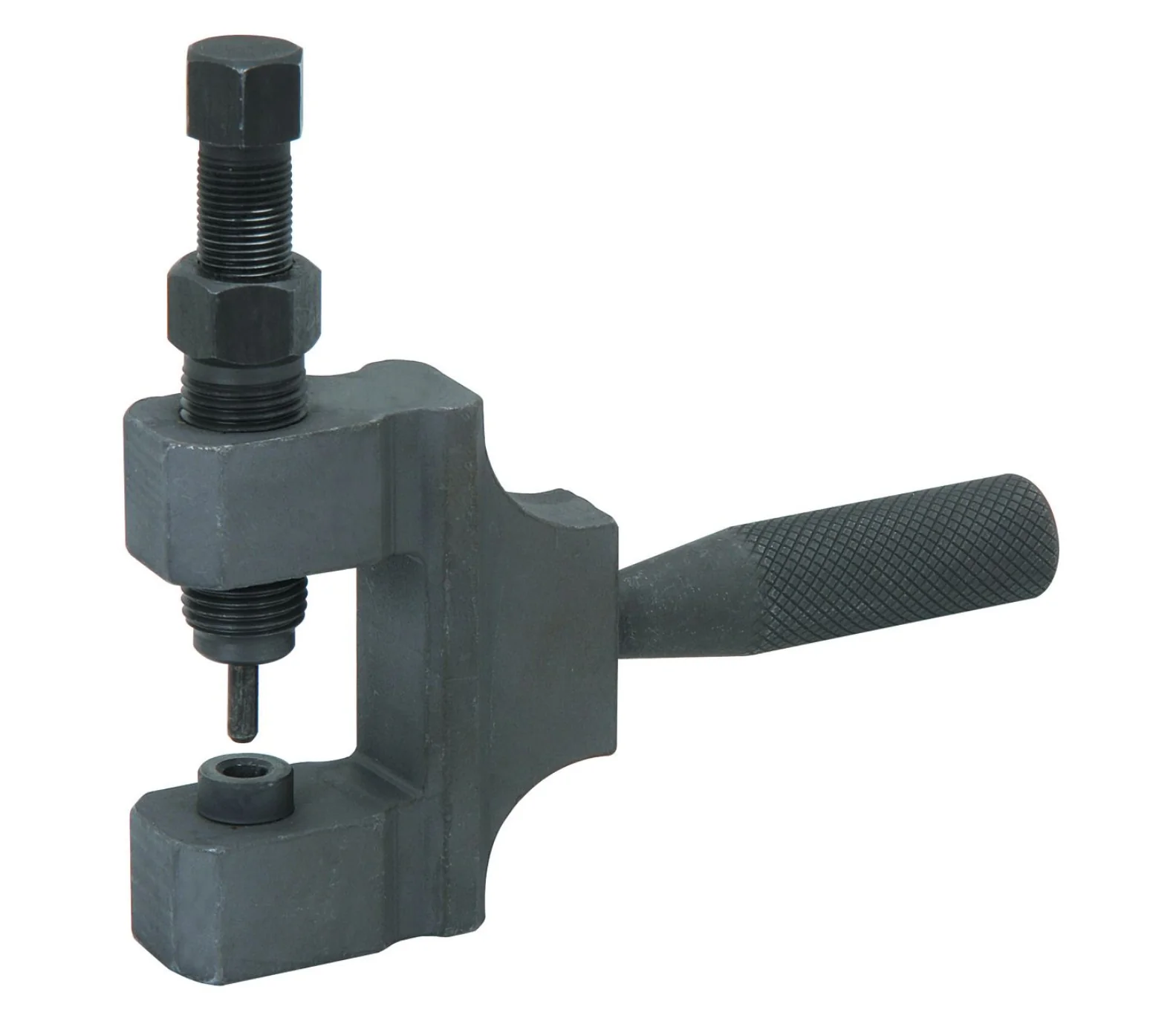
For reference, see the motorcycle chain breaker series for selected 420–530 chains. Confirm the exact application against each product’s specification.
Engine, flywheel and clutch service
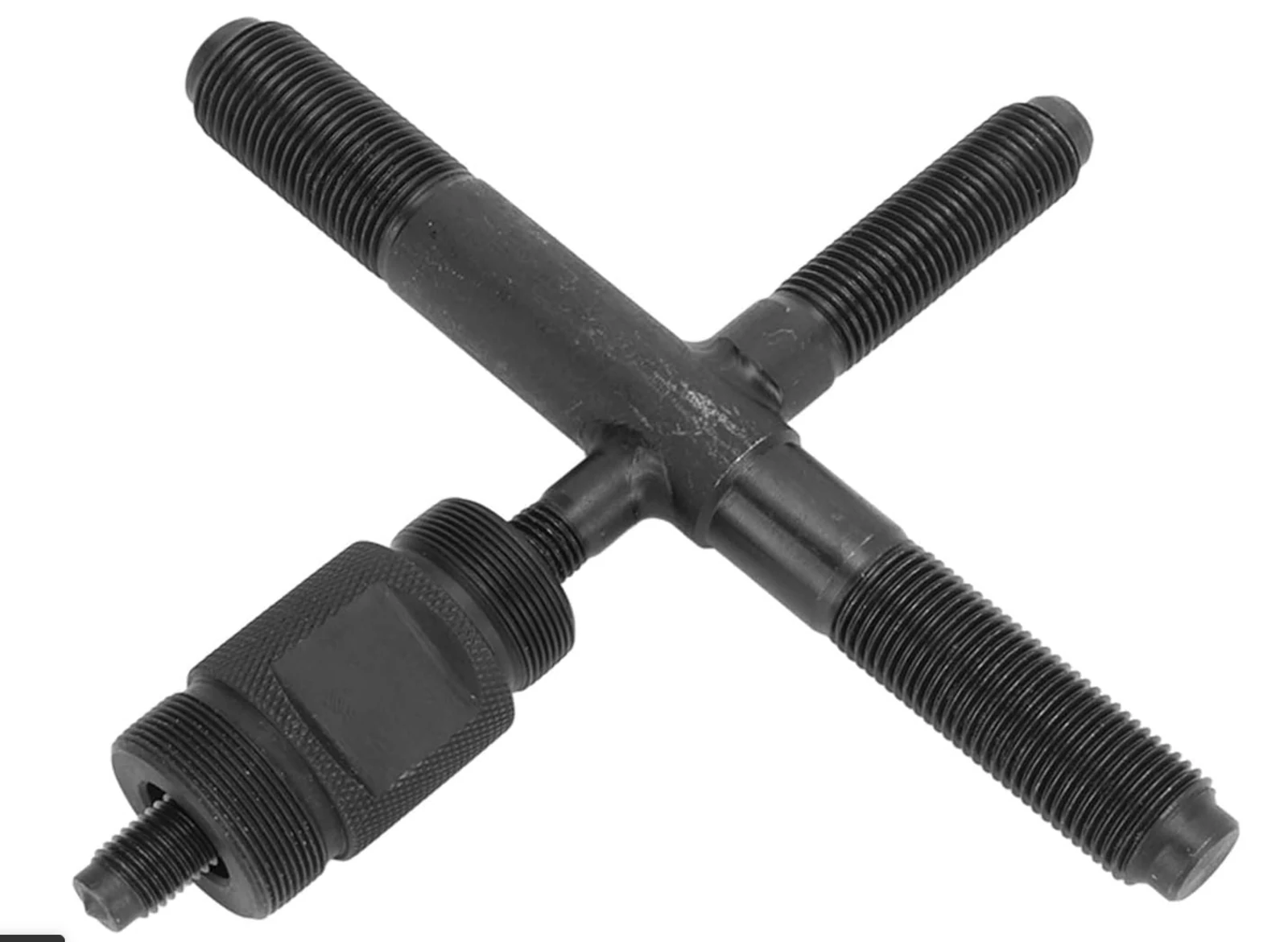
This category often needs greater technical depth because pullers and holding tools can differ by thread diameter, pitch, thread direction, reach and engagement design. Group related options so buyers can compare them, but do not merge products simply because their appearance is similar.
The 6-in-1 motorcycle flywheel puller illustrates a multi-configuration approach, while individual pullers may be required for specific thread and application combinations.
Wheel and tire service
Tire levers, axle wrenches, rim protectors and related accessories can be planned as a connected group. Review working sizes, tool profile, material and whether a customer needs a single tool, a combination tool or a coordinated set.
The motorcycle tire lever and axle-wrench combo series is an example of presenting related functions as a product family without assuming every variant is identical.
Suspension and fork service
Fork seal drivers and related suspension tools need clear size and application information. A useful product family page should explain the available size range and design differences, while each individual product should retain the details needed to confirm suitability.
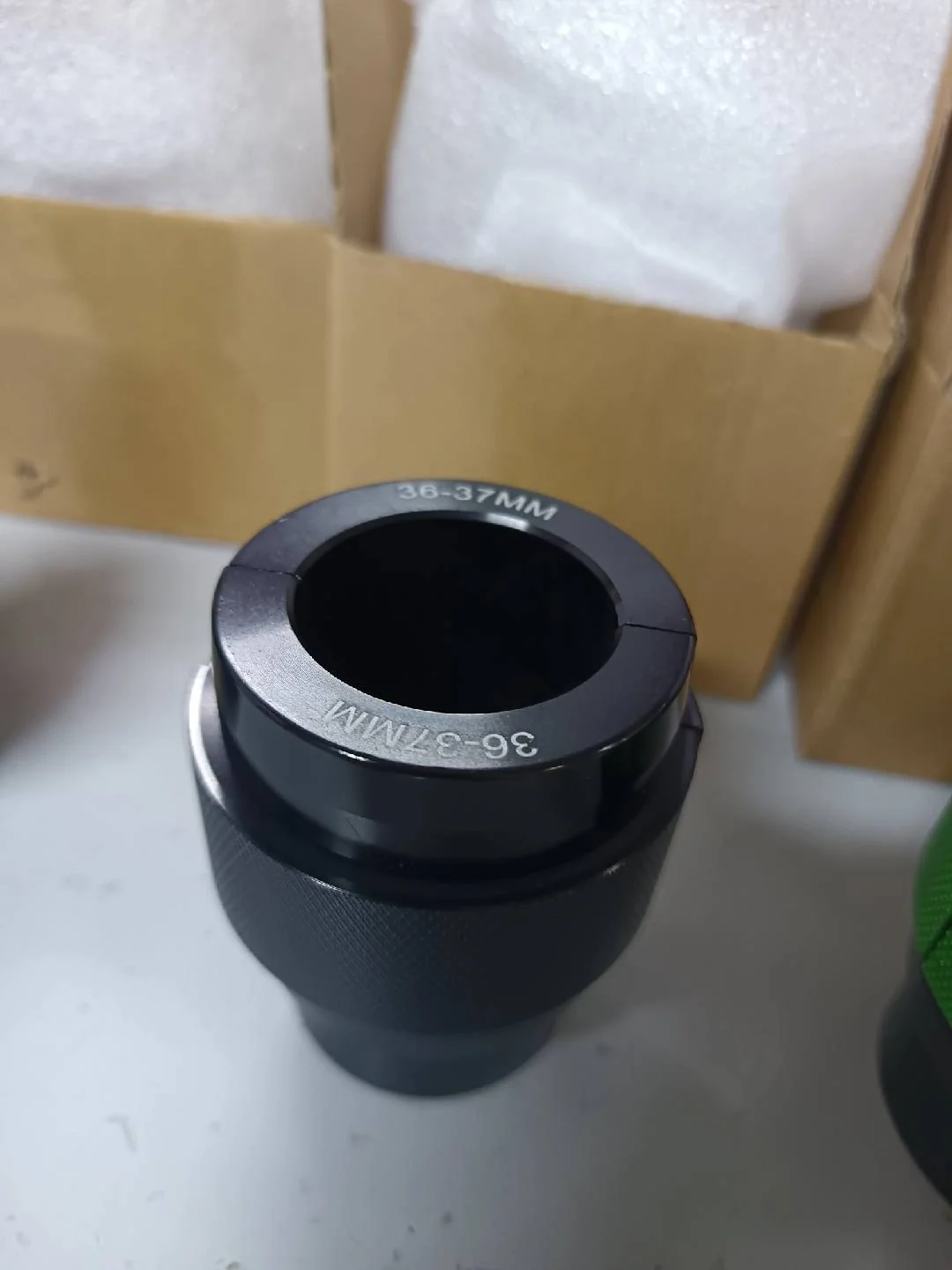
See the motorcycle ringer fork seal driver series for an example of a size-based product family.
Other workshop and maintenance applications
Depending on the target customer, the range may also include holding tools, hook spanners, bearing-service tools, cable-service tools and other application-specific items. Add these because they fill a real customer need—not simply to make the catalogue appear larger. Browse the broader Motorcycle Service Tools range to see how specialty products can be grouped within a wider assortment.
3. Balance range breadth with category depth
Two common range-planning mistakes are offering a few products in too many categories without useful coverage, or going very deep in one category while leaving major customer needs unaddressed. A practical range often develops in layers.
| Range layer | Purpose | How to decide what belongs |
|---|---|---|
| Core coverage | Give target customers access to the main repair tasks they regularly encounter. | Prioritize evidence from repeat orders, customer requests and the intended market. |
| Category depth | Offer meaningful alternatives within a relevant category. | Add variants when they address a real difference in size, application, construction or price positioning. |
| Specialist coverage | Serve specific vehicle families, repair procedures or technical requirements. | Use confirmed demand, fitment information and a clear commercial reason to carry the item. |
| Custom or private-label projects | Address a buyer’s own brand, assortment or application requirements. | Define changes, volume, packaging and approval steps before committing. |
This framework does not prescribe a fixed number of SKUs. The right balance depends on customers, budget, available storage, replenishment model and the technical breadth required in each category.
4. Separate similar-looking SKUs by the details that matter
SKU planning needs more discipline than comparing product photos or names. In specialty tools, a small technical difference can determine whether a tool is suitable for an application.
- Working size, thread diameter, thread pitch and thread direction.
- Chain size or other supported component specification.
- Tool function and the repair procedure it is intended to support.
- Material, finish, construction or adapter configuration where these affect the application.
- Vehicle or component fitment, including model-year limits when confirmed.
- Included accessories, replacement parts and compatibility restrictions.
Use a parent product family to help buyers compare related options, but preserve separate variants where the technical specification or intended use differs. Do not imply universal fitment when the application has not been verified.
5. Build a product-range matrix before adding more SKUs
A simple range matrix helps purchasing, sales and product teams work from the same information. It can also reveal gaps, duplicate coverage or too many variants without a clear purpose.
| Field | What to record | Why it matters |
|---|---|---|
| Repair task | The job the tool helps perform | Connects the product to a customer need. |
| Product family | Category and related variants | Makes range coverage and gaps easier to review. |
| Critical specification | Sizes, thread details, supported chain or component, and fitment evidence as applicable | Reduces misclassification and incorrect substitutions. |
| Target customer | General workshop, specialist, distributor, brand or other defined buyer | Clarifies the intended sales channel. |
| Range priority | Core, category-depth or specialist | Helps decide what to launch, stock or review later. |
| Commercial evidence | Orders, enquiries, repeat demand, lost quotations or customer feedback | Separates evidence-based decisions from assumptions. |
| Supply plan | Standard item, made-to-order item or custom project; confirm MOQ and lead time | Sets realistic purchasing and replenishment expectations. |
| Content readiness | Images, specifications, fitment notes and approved claims | Helps the sales team explain and sell the product accurately. |
Keep the matrix practical. If a field does not help a buyer select a product or help your team make a range decision, it may not need to be part of the initial review.
6. Use demand evidence to decide what to add next
Do not expand a range based only on catalogue size or a competitor’s visible assortment. Use evidence from your own business and target market.
- Review repeat orders. Identify categories and specifications customers reorder consistently.
- Group customer enquiries. Repeated requests for a missing size, application or related tool may reveal a genuine range gap.
- Review lost quotations. Find out whether the gap was product coverage, fitment, price positioning, packaging or another issue before adding a SKU.
- Track returns and fitment questions. Confusion around specifications may indicate that the range structure or product information needs improvement.
- Check replenishment practicality. A product’s commercial value also depends on whether the supply arrangement fits the way your business operates.
Where reliable sales history is limited, start with a defined pilot assortment and gather feedback before making a large inventory commitment. Treat the first range as a testable plan, not a permanent catalogue decision.
7. Know when a standard product is enough—and when customization is justified
Standard products can be a sensible starting point when they already meet the intended application and specification. Customization is worth evaluating when it solves a defined problem, such as a required size or configuration, a market-specific assortment, a brand presentation requirement or a packaging need.
For private-label and OEM/ODM programmes, define the requested change precisely. A logo or label change is different from changing working dimensions, creating a new adapter or developing a new design. Those changes can affect sampling, tooling, cost, minimum quantities and production timing.
NACHEE supports motorcycle tool sourcing and OEM/ODM projects for B2B customers. Buyers can begin with a standard product family, then discuss selected specification, branding or packaging changes when there is a clear requirement. See the OEM & ODM service overview.
8. Keep the published catalogue as clear as the range itself
A well-planned assortment can still be difficult to buy if the online catalogue is organized only by internal SKU or inconsistent product naming. For a distributor-facing catalogue, use clear category labels, recognizable product names and a consistent place for the specifications buyers need to compare.
- Group tools by repair task and product family.
- Use consistent names for related series while retaining meaningful size or design distinctions.
- Show critical specifications and verified fitment close to the product name.
- Use real product images that help buyers distinguish variants.
- Link related items and category pages so buyers can move from a task to suitable options.
- Keep customization options separate from confirmed standard-product specifications.
This structure helps customers browse the range and gives search engines clearer context about products and their relationships. It does not guarantee rankings or AI citations, but it makes the catalogue easier to understand and use.
A practical checklist for distributors
- Define the target customers and the repair tasks they need to cover.
- Group the assortment by maintenance task, then map the relevant product families.
- Separate core coverage, useful category depth and specialist applications.
- Record critical sizes, threads, fitment and compatibility details for each SKU.
- Use orders, enquiries, returns and quotation feedback to prioritize gaps.
- Confirm standard supply, MOQ, lead time and replenishment expectations before committing.
- Consider OEM/ODM only where a defined customer or commercial need justifies it.
- Keep category pages, product names, images and specifications consistent.
Frequently asked questions
How many motorcycle specialty tool SKUs should a distributor carry?
There is no universal number. Start with the repair tasks and customers you intend to serve, then use sales history and customer enquiries to decide where broader coverage or additional variants are justified. A smaller, well-defined range can be more useful than a large catalogue with unclear fitment.
Should a distributor prioritize general tools or model-specific specialty tools?
That depends on the customer base. General-use tools can support broader coverage, while model- or application-specific tools can serve specialist needs. Plan the balance using verified demand and technical fitment information rather than assuming one group is always more valuable.
How can I reduce duplicate SKUs in a motorcycle tool range?
Compare the function, critical specification, fitment and included components of related items. Keep variants separate when a technical difference changes suitability, but avoid listing the same configuration multiple times under inconsistent names.
Can a product range be developed from standard tools and customized later?
Often, yes. A buyer can begin by selecting suitable standard products, then evaluate branding, packaging or specification changes based on customer needs. Any change that affects fitment, function, tooling or production should be reviewed and approved before it becomes part of the range.
What should I send when requesting a proposed tool range?
Share the target market and customer type, repair tasks to cover, any known vehicle or component requirements, preferred product categories, estimated order volume and branding or packaging needs. Existing product lists, reference samples and customer enquiries can help clarify priorities.
Plan your motorcycle specialty tool range with NACHEE
If you are building or expanding a motorcycle repair-tool catalogue, share your target market, customer profile, priority repair categories and estimated purchasing requirements. NACHEE can help review relevant standard product families and discuss suitable OEM/ODM options where needed.
Explore Motorcycle Service Tools · Request the Product Catalog · Discuss Your Project
For related planning topics, read our guides on choosing a motorcycle repair tool supplier, selecting a tool-kit storage format and specifying motorcycle bolt kits before ordering.