

A good motorcycle bolt kit is defined by fitment, fastener specifications and a useful assortment—not just by the number of pieces in the box. For distributors, wholesalers and motorcycle brands, the brief should also cover material, surface finish, packaging, branding and the checks required before bulk production.
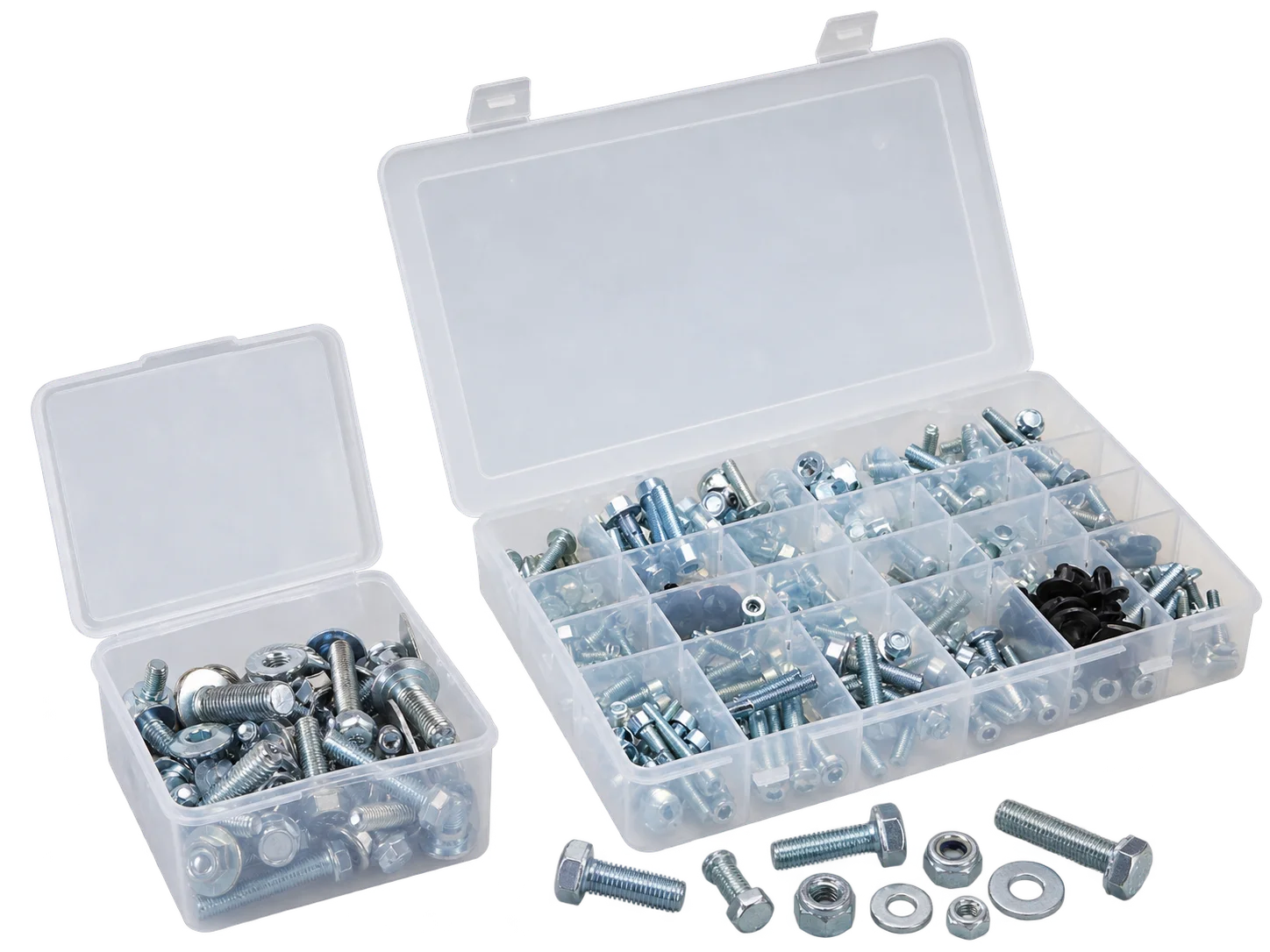
Whether you are sourcing an existing assortment or planning a private-label program, a clear specification helps suppliers quote accurately and reduces avoidable changes during sampling and packing. This guide explains what to confirm before ordering motorcycle bolt kits for your market.
1. Choose the right type of motorcycle bolt kit
Start with the job the kit needs to do. Most purchasing briefs fall into one of three broad groups.
Universal or general-maintenance assortments
These kits bring together commonly used fasteners for general maintenance, repair and replenishment. They can suit distributors serving a broad customer base, provided the assortment clearly states its dimensions and intended use. The term “universal” should not be taken to mean that every fastener fits every motorcycle.
Vehicle-specific bolt kits
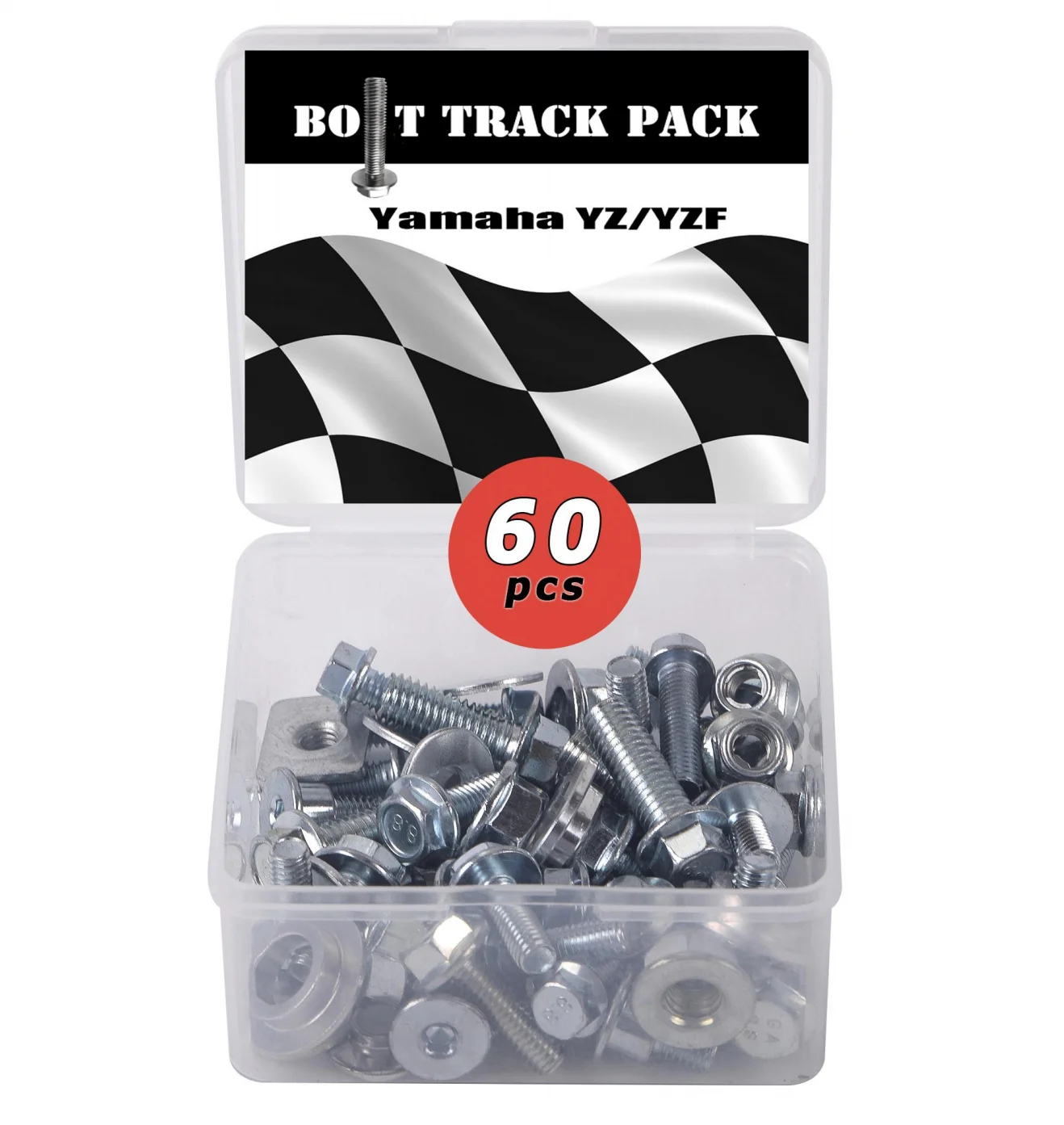
These are organized for a defined motorcycle model, model family or platform. NACHEE’s existing reference range includes selected off-road applications such as Honda CR/CRF, Kawasaki KX/KXF, Suzuki RM/RMZ and Yamaha YZ/YZF. The exact model and year coverage should be confirmed rather than inferred from a brand name alone.
Component-specific fastener kits
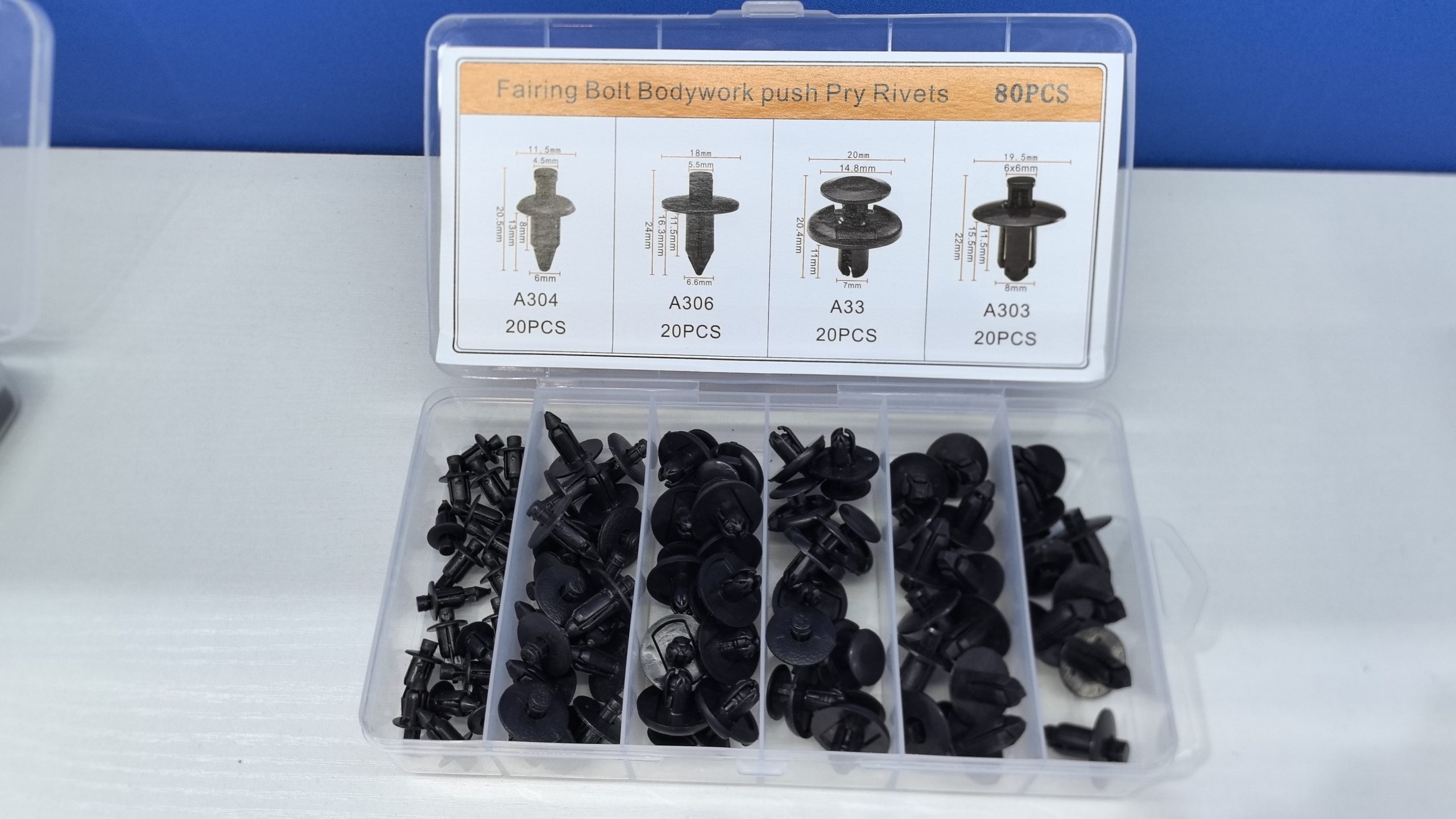
These focus on a particular repair area or group of components, such as fairing and bodywork fasteners, brake rotor hardware, sprocket hardware or radiator-shroud fasteners. They can help distributors build a more focused range around a known maintenance need.
Buyer’s first decision: Is the kit intended for general replenishment, a particular motorcycle platform, or a defined component or repair task? That answer guides the contents list and fitment checks.
2. Confirm vehicle fitment before finalizing the contents
For a vehicle-specific kit, provide as much application information as possible:
- Motorcycle brand and model or model family.
- Model year or intended year range, including relevant variations.
- Target market, if specifications differ by region.
- OEM part references, an existing kit, drawings or clear photographs, if available.
- Any known exclusions or fasteners that must be included.
If the kit is intended for general maintenance rather than a verified vehicle-specific application, make that clear in the product brief. When fitment information is incomplete, agree on how it will be checked before approving the final bill of materials (BOM). A sample or reference kit may be needed for new configurations.
3. Specify fasteners by their actual dimensions
A description such as “motorcycle bolts” or even “M6 bolts” does not fully define a kit. Depending on the application, each item may need to be specified by:
- Fastener type: bolt, screw, nut, washer, spacer, cotter pin or another component.
- Thread details: nominal diameter, thread pitch and any relevant thread specification.
- Length: the required length, measured using the appropriate reference for that fastener type.
- Head style and drive: for example, hex flange head, pan head or flush-mount screw.
- Related hardware: washers, nuts, bushes or other components needed for the application.
- Quantity by item: how many of each size and type belong in one kit.
A BOM is one of the most useful documents for a custom bolt kit. It should identify each item, its specification and the quantity required. If you do not have a complete BOM, an existing kit, reference sample, drawing or clear photographs can provide a starting point for review.
4. Define material, strength grade and surface finish
Material and finish should be selected according to the application, required performance, appearance and target market. They should be agreed for the actual fasteners in the proposed kit rather than assumed from a general product description.
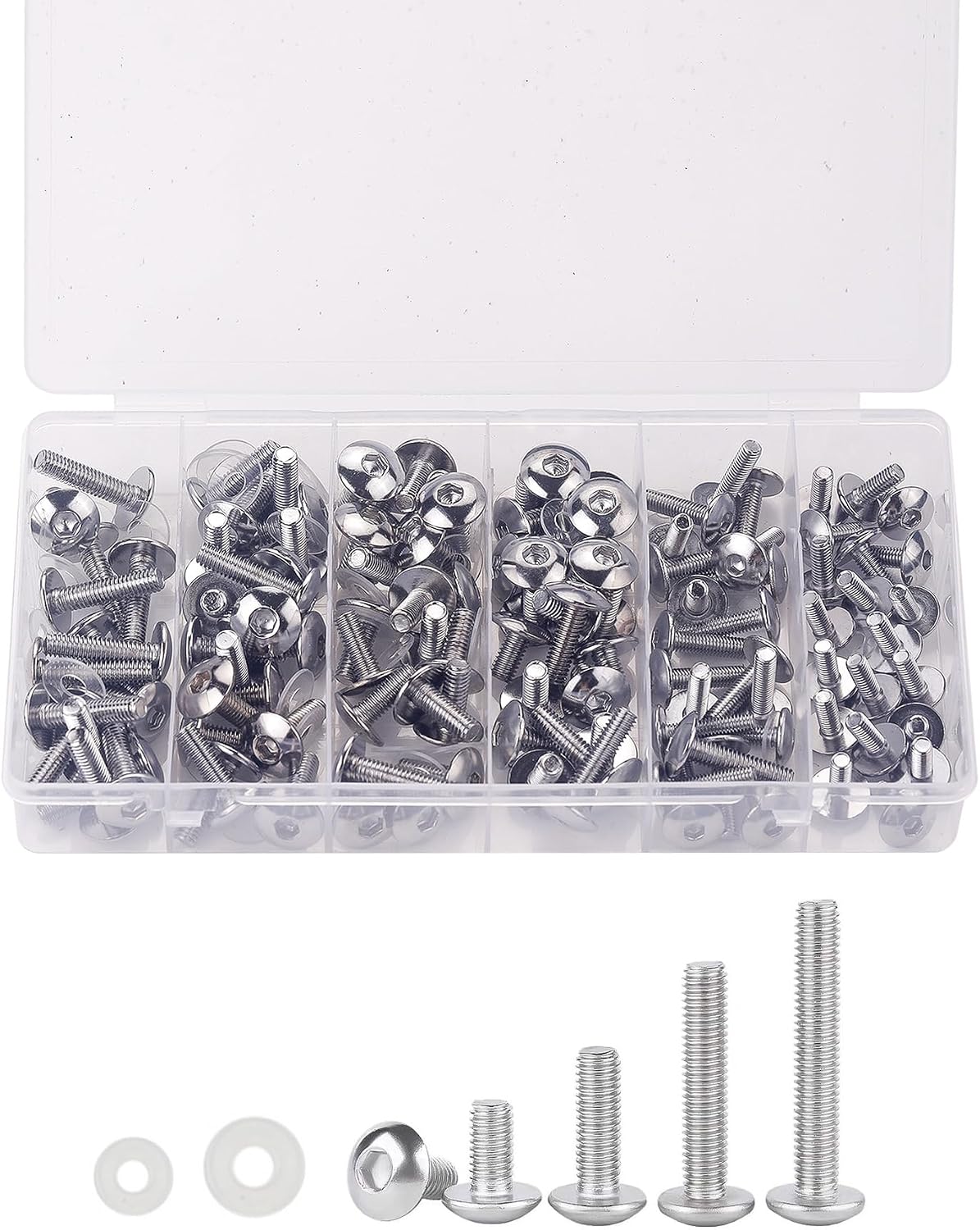
For example, NACHEE’s existing off-road bolt kit references include heat-treated carbon-steel fasteners in grades 8.8 and 10.9, with zinc, chrome or Dacromet-plated finishes. Some component-specific assortments use different fastener materials, including stainless steel. These are examples from particular configurations—not default specifications for every project.
When discussing a customized kit, clarify:
- Required material and mechanical properties for the intended application.
- Preferred surface treatment, appearance or color.
- Corrosion-resistance expectations and any relevant acceptance criteria.
- Whether different fastener types require different finishes.
- Any testing, sample or documentation needed before approval.
Surface-treatment combinations and appearance can be discussed for a customized project, subject to the fastener material, process feasibility and application requirements. Do not select a finish by color alone; agree on the intended specification first.
5. Set the piece count around the application
Motorcycle bolt kits can be configured from dozens of pieces to several hundred, depending on the intended coverage and assortment. NACHEE’s existing reference products include 60-piece, 110-piece, 160-piece and 210-piece configurations across different applications. These are reference examples, not fixed limits for a custom program.
For examples of different pack sizes, review the 60-piece Yamaha YZ/YZF Bolt Hardware Track Pack and the 210-piece Kawasaki KX/KXF Bolt Hardware Pro Pack. These are reference configurations; confirm the intended model-year coverage and final contents before ordering.
A larger piece count does not automatically make a kit more useful. The assortment should reflect the fasteners customers actually need, with sensible quantities by size and type.
Before approving the configuration, confirm:
- Which fastener types and sizes are essential.
- The quantity of each item in one kit.
- Whether frequently used items need additional quantities.
- Whether the kit should prioritize broad coverage or a specific repair area.
- How the items will be separated, labeled and replenished.
Keep two numbers separate: piece count is the number of individual components in one kit; order quantity is the number of kits purchased. MOQ is agreed separately and depends on the configuration, customization and supply conditions.
6. Plan packaging and private-label details early
Packaging affects product protection, ease of use, retail presentation and shipping. A compartment organizer can keep sizes separated, while other formats may be considered according to the assortment and sales channel.
For a branded program, discuss the following alongside the BOM:
- Organizer or storage format and compartment arrangement.
- Labels, size identification and product information.
- Private-label logo placement and artwork.
- Packaging format, language and retail presentation.
- Barcode labels, master cartons and carton markings.
- Any requested color or appearance options.
Packaging and branding options can be evaluated for the project. Confirm artwork, labeling and packing details before sample approval so that the approved reference covers the full product—not only the loose fasteners.
7. Confirm samples, quality checks, MOQ and delivery
A quotation is most useful when it is based on an agreed specification. Before placing a bulk order, clarify the following points with the supplier.
- Sample requirements: whether an existing sample is suitable or a modified sample is needed.
- Approval criteria: dimensions, fastener types, material and finish, item quantities, labels and packaging.
- Quality checks: how the packed kit will be checked against the approved BOM and sample.
- MOQ and pricing: the order minimum and any cost impact from special finishes, new packaging or a revised assortment.
- Lead time: the expected schedule for sampling, revisions, order preparation and shipment.
- Carton details: kits per carton, carton dimensions, gross weight and shipping arrangements.
For repeat orders, retain the approved BOM, sample reference and packaging artwork. These records provide a clear baseline for replenishment and make later changes easier to manage.
A practical checklist for your bolt kit inquiry
| Item | Information to provide |
|---|---|
| Kit type | General-maintenance, vehicle-specific or component-specific |
| Application | Target models, model years or repair area |
| Fastener details | Types, dimensions, thread details and quantities by item |
| Material and finish | Required material, strength grade, treatment and appearance |
| Kit configuration | Target piece count and assortment priorities |
| Packaging | Organizer, labels, logo, retail packaging and carton requirements |
| Order plan | Estimated number of kits and expected replenishment needs |
| Reference materials | BOM, drawings, photos, existing kit or sample, if available |
| Schedule | Sample needs and target delivery date |
You do not need every detail finalized before starting a discussion. Share what is known and identify what still needs to be confirmed. The aim is to close specification gaps before they become sampling, packing or delivery problems.
How NACHEE supports motorcycle bolt kit projects
NACHEE works with importers, distributors, wholesalers and motorcycle brands on bolt kits and related motorcycle tool sourcing programs. Buyers can start from an existing reference configuration or discuss a custom assortment based on their target application and market.
Depending on the project, discussions can cover fitment, fastener specifications, piece count, material and surface finish, private-label branding, packaging, sample evaluation and export shipment coordination. Final specifications, customization feasibility, MOQ and lead time are confirmed for each project.
Explore the NACHEE Motorcycle Bolt Kits range for existing reference configurations, or learn more about our OEM & ODM support.
Frequently asked questions
Can I customize a motorcycle bolt kit for a specific model or market?
Yes. A project can start from an existing configuration and be reviewed for the intended application, fastener specifications, assortment, finish and packaging. Exact fitment and customization feasibility should be confirmed before bulk ordering.
Can a kit contain several hundred pieces?
Several-hundred-piece assortments can be discussed where the application calls for them. The final contents should be based on the BOM and intended coverage. Piece count, order quantity and MOQ are three separate considerations.
Can I request a different surface finish or a combination of finishes?
Finish options and combinations can be evaluated according to the fastener material, application and process requirements. Confirm the required appearance and performance, then review feasibility and any sample or order requirements with the supplier.
What if I do not have a complete fastener list?
Start with the target motorcycle models or repair application, plus any existing kit, photos, drawings or reference samples. These materials can help identify the missing specifications before the final configuration is approved.
How do I get a quotation for a private-label bolt kit?
Share the intended application, preferred configuration, known fastener specifications, finish and packaging requirements, estimated order quantity and target schedule. If some details are not yet available, explain what you need the kit to cover so the project can be reviewed.
Planning a motorcycle bolt kit program?
Tell NACHEE about your target application, desired assortment, finish and packaging requirements. We can review a suitable starting point for your purchasing program.
Discuss your project or request the NACHEE product catalog.
For more sourcing guidance, read How to Choose a Motorcycle Repair Tool Supplier in China.